Exploring the Fascinating World of Palm Trees (Say Palm Fronds!)

Welcome back to my little corner of the internet. Last Sunday was Palm Sunday (and the Sunday we dedicated our little grand baby to the Lord … but that was just a coincidence … and I just had to mention our little man because that’s what good grandma’s do … but it’s not my main point for this week). Palm Sunday. So called because the patrons of Jerusalem waved the branches of palm leaves during the triumphant entry of Jesus. Anyway, during a recent walk out in our local forest trail the youngest was commenting on Palm branches, Palm Sunday, and the like, and we laughed: “If Jesus had to come to Canada, wonder if we would have pelted Him with pine branches or something” was the comment. And so I muse…

Did you know that you can order exotic palm trees that are cold hardy enough to grow all winter in Canada? I guess they aren’t just for Palm Springs or Jerusalem! There are over 2500 species of Palm … and not all are classified as “trees”. The tallest one is about 200 feet high. But let’s face it, palm trees make you think of sandy beaches, coconut drinks and relaxing vacations. Or the strip at Vegas. Or that fancy place where people buy expensive clothes. Am I right? Maybe Jesus on a donkey is not your first thought when you hear “Palm trees”. Let’s think deeper. Those big fan-like leaves are called fronds. That’s a fun word to say: “Palm fronds”. I used to read a book to the kids about a little girl who made dolls out of palm fronds. It was a hard word to say then. Palm fronds. Go ahead; try and say it 10 times fast.

Anyway, fun fact: Palm fronds were built to withstand huge gusts of winds (think tropical rain storm hurricane) and once they do become separated from the tree, are not easily broken down. According to ABC news, Phoenix alone dumps roughly 34,000 tons of palm fronds from city streets into a landfill, costing over half a million dollars every year. That’s the mass equivalent of throwing out more than 4,500 African elephants. Yet, unlike our Canadian pile of mulchy leaf muck, palm fronds can easily be turned in other organic works of art: baskets, hats and even fencing or roof thatches. Reminds me of another Bible story of the friends who lowered the sick guy down through the roof. Can you imagine Jesus getting rained on by twigs and buggy leaf bits as they tear up the roof that must, at this point, be dried grassy brittle palm fronds. Say it again: palm fronds. Giggle. I hope it gets stuck in your head. Palm fronds. Palm fronds. Pond frogs. Pog Wands. Okay, enough about that.

One of the trees on our property after the ice storm

You’ve got to admit, trees are one of God’s most fascinating creations. Huge trunks, teeny buds. Our recent ice storm made me appreciate both the strength and fragility of trees. Mighty oaks and maples are littered on our streets now, and the huge cracks tell a story. If you look closely, there are almost holes where the branches grew out from the trunk. Even tonight, the hubby and I were surveying the forest on our property. It’s going to be a mess to clean up and process off the lawn. Unbreakable leaves notwithstanding, Canadian trees have many more branches to make a mess with than those tall palm tree trunks that only monkeys and very talented locals can climb. No tire swings, I guess, on Rodeo drive.

And that’s my little bit about the trees. Like Dr. Suess’ Lorax, I speak for the trees today… their uniqueness. Their symbolism. Their might. Their weaknesses. An object so abundant, we take it for granted. We cut them up. Toss them in the fire. Throw them on the ground, and pile up the leaves. Have you ever hugged one? Looked at and felt a tree trunk? Rubbed a soft maple leaf between your fingers? Or cut your fingers open on the sharp edge of those palm fronds they give out on Palm Sunday to the little kids to wave Hosannas with? Yup, God did a good job when He thought up all those green things that are out there in the woods. And in the streets of Jerusalem that day. Symbols that take a very long time to break down. I wonder if the streets left evidences weeks later of cloaks and leaves along the path. And if the locals remembered and pondered the events of that Holy Week. Did you know that “palm frond” in Hebrew is Lulav. Lu – to or unto, Lav, heart. In other words “We give to you our hearts.” 

Now, How about that for a cool thing to say? Lulav. Palm frond. It really is fun to say, isn’t it? You’re welcome.

I Speak for the Trees

Welcome back! In case you haven’t been following along, we are headstrong into our first attempt at maple syrup making here at Itsnotta Farm. One of the first things we needed to do when we decided to tap a few trees, was to figure out what trees to tap! Not all trees are syrup producers and not all producers are good ones. We knew we had a few maples, but not true sugar maples. So, we did what everyone does: we googled it. Which helped. A little. There are no leaves on the trees this time of year, so branch position, bark texture and subtle other clues are supposed to help. I’m sorry, but tree bark is tough to distinguish. Really. Rough? It’s all rough and buggy and torn up and wounded to me. Who knows? Just poke some holes in there… if stuff comes out, the sap is running.

And so began my muse: trees. A really broad scoping thought, I know. There are a whack load of thoughts about trees out there, but let’s just touch on it, shall we? We have just over an acre and a half of “forest” on our property. No real trails. Thick with bush and trees “au naturel”. Trees rot and fall and succumb to various viruses and afflictions. We have a big one near the chicken coop that needs to come down. We have a large surround of cedars which is quite nice coverage for the wind… the birds love them too. Not to mention the vast trail systems here in Ontario. Or the Crown Land and woods literally everywhere. Rain forests of central America? Let’s not even go there. Needless to say, we have a lot of trees in our world.

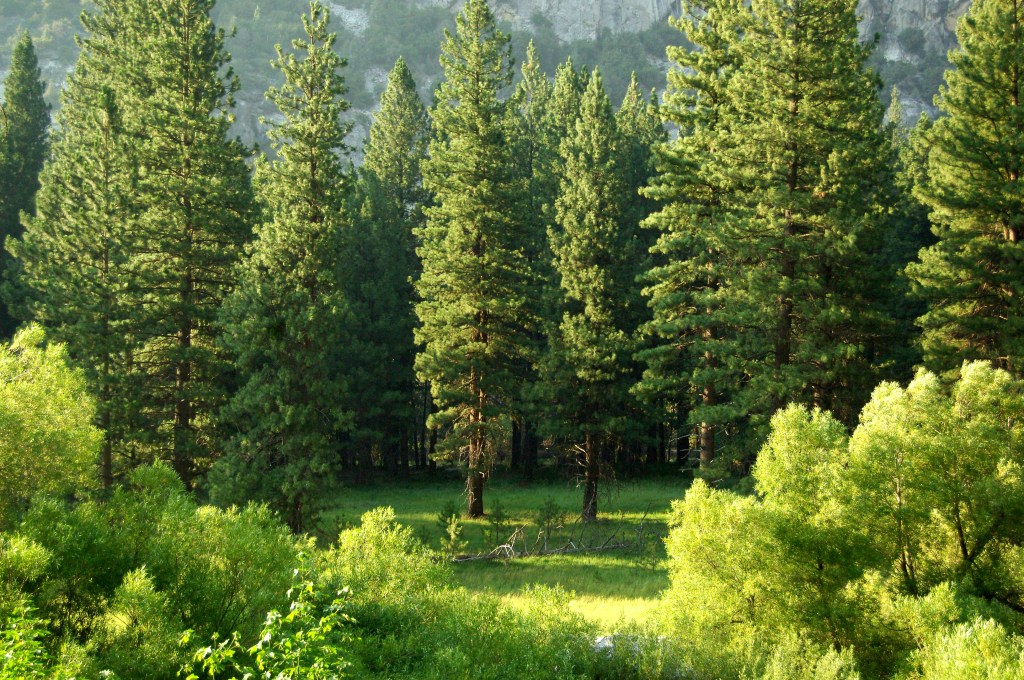
Photo: Matt Artz via Unsplash

We plant 600 million trees annually in Canada… and I don’t know if that includes all the private trees we throw in the ground or not. I plan to add a few fruit trees to our place — which I hope will add to the diversity. The birds will probably get to the fruit before I do. We were chit chatting about tree planting a few weeks ago… apparently it is not for the faint of heart. True planters hike through unkept wilderness fighting off heat, sweat, mosquitoes and other menacing buggies. Not to mention scrapes bumps and bruises from branches and brambles along the way. I’m sure there is mud too. Nope… not for me. A few holes in open field with my nursery raised apple tree and I have done my part, right?

Still, trees are pretty cool. They communicate not only to their surroundings, but to each other through chemical signals and can warp sound waves to change what we hear. Research suggests that being around trees is good for our mental and social well-being. A study conducted by the University of Illinois and the University of Hong Kong found that the denser the forest, the lower the stress. Research also suggests that nature experiences help us to feel kinder toward others. This is partly because they release chemicals called phytoncides. When we breathe them in, it can reduce blood pressure, lower anxiety levels, and increase pain threshold. I often tell the hubby I do love a good “soak” in the forest. Must be all the chemicals I breathe in. Or maybe it’s just the quiet.

“The Tree of Life”

It’s no wonder that the tree has been a symbol for life across so many genres of study. I’m sure you’ve heard of it. Seen it as a jewellery piece or art deco. Obviously branches and life giving oxygen are intertwined within the symbol. “I am the vine, you are the branches”. The biggest connection, and my original thought process for this post, was the Garden of Eden and the tree of the knowledge of Good and Evil. Such a critical piece of our Christian heritage. I cannot imagine living in a perfect world — the perfect garden — with its abundance of fruit and colours and wildlife — and it all being lost because of selfish desires.

We have just tastes of it now — maple trees and sweet sap. Apple trees and rich fruit. Mighty oaks and cedars that tower and protect us from wind. The colours of fall leaves or the beauty of teak and mahogany. How marvelous is “the tree”. We take it for granted. We have so many. They are so common. We don’t see the forest for the trees. We must take the time.

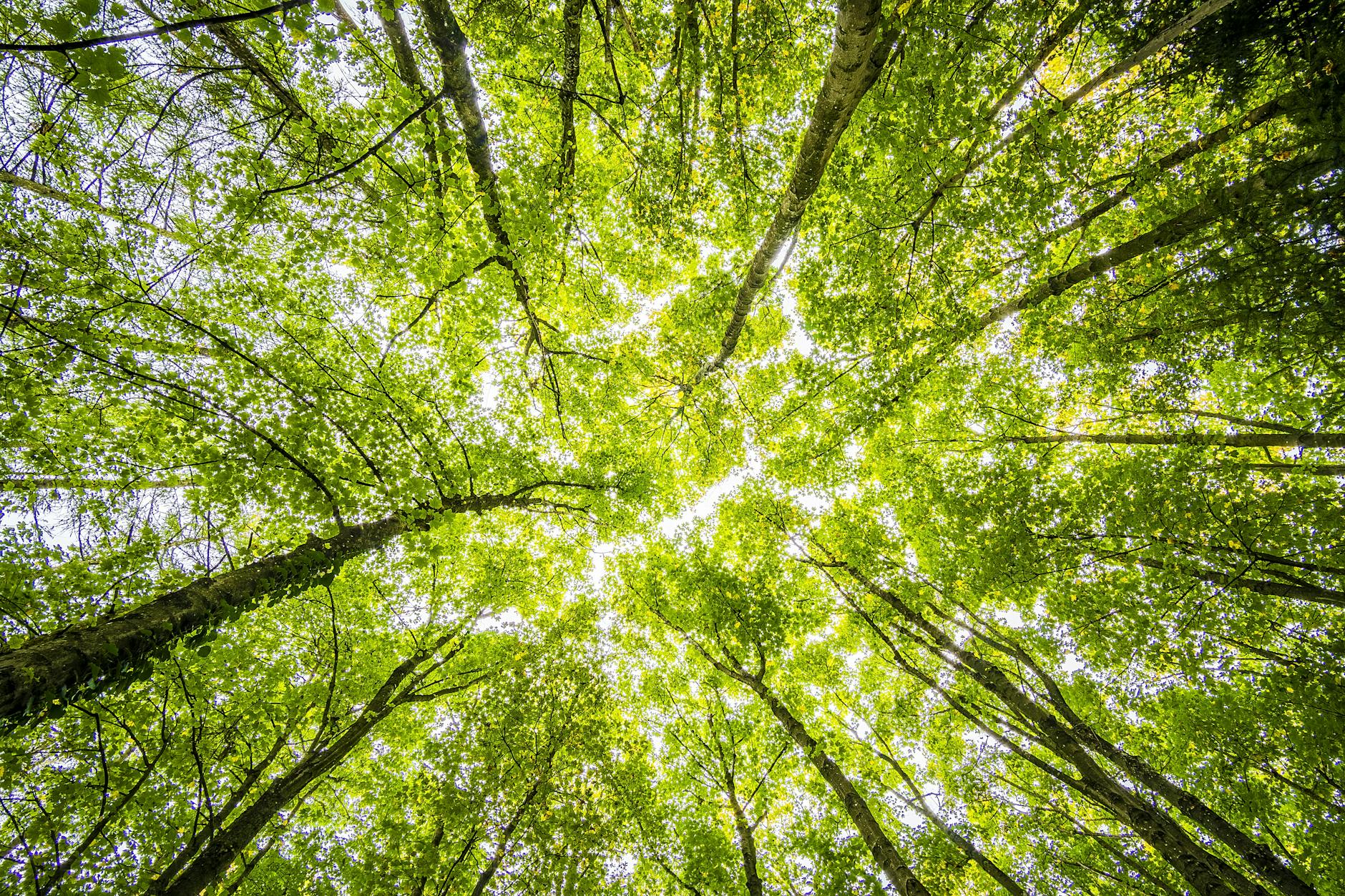
Deeper still, we must think about why the Creator of the world chose a tree to symbolize life for us. Why was a tree the center of the Garden? Why was the Saviour crucified on “a tree”? Why do we brush them off as so common place that they aren’t appreciated? We burn them up and cut them down with abandon. I could go on. A tree hugger muse this week which could be expanded way beyond these short thoughts. Yet, I hope it sparks some deeper thinking and research for you. Or at least makes you look up at the trees (and beyond).

Photo by Felix Mittermeier on Pexels.com