The Advent Candle of Hope

Once upon a time, a small table stood in the corner of an old church. Upon it sat four candles. Their lights were dim and barely glowing. The shadows cast were gloomy and silent, and you could scarcely hear the candles speak. The first candle whispered, “I am Peace. But these days are dark with war and no one wants to keep the Peace anymore.” The Peace candle slowly flickered out into a puff of silent smoke.

The second candle jiggled slightly at the sight of Peace’s flame extinguishing. “I am Faith. Very few have kept the Faith these days — and I am tired of fighting. I am no longer essential in today’s society.” The Faith candle had no more energy and flickered out.

As it watched the other two candles, the sad third candle spoke, barely audible in the now dimly lit corner. “I am Love, but I no longer have the strength to carry on. People put me aside and don’t understand my importance. They even forget to love those who are nearest to them.” Waiting no longer, the third candle of Love quickly extinguished completely.

Suddenly, a small child entered the church’s barely lit sanctuary and sees that three candles are no longer burning and begins to cry. “Why are you no longer aflame?! You are supposed to stay lit until the end!”

It is now, that the fourth candle speaks gently to the small child. “Don’t be afraid, for I am Hope, and while I still burn, we can re-light the other three candles, and encourage them to share their light!” With shining eyes and a tear-streaked face, the child took the Candle of Hope and lit the other three candles. A warm glow once again enkindled the old church sanctuary.

The moral of the story is: Never let the flame of Hope go out of your life, for no matter how bad things look, Faith, Peace and Love can continue to shine brightly if there is Hope.

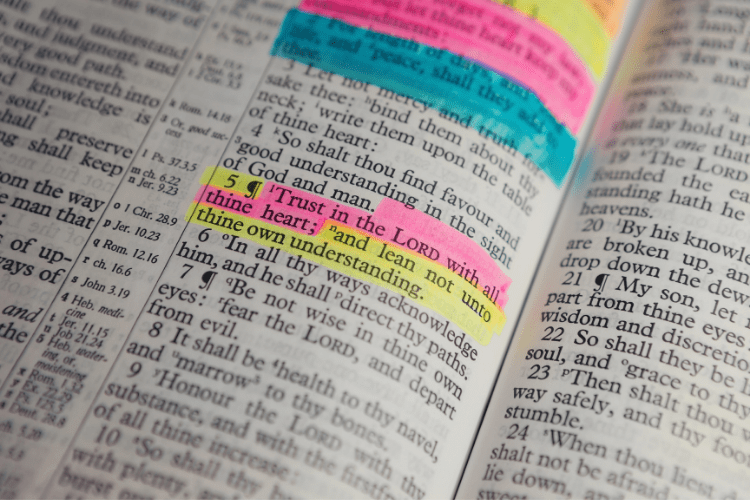
I came across this little story (by an unknown author) and adapted it here for my post about our first week of Advent: The candle of HOPE. Romans 5 reminds us that even through our trials, hope brings about good. If our hope is in Christ, our futures are bright. He brings the joy of the season fresh and new. Sometimes called the prophecy candle, the first candle of Advent can remind us that not only did Jesus come to earth on the first Christmas night, but He is coming again soon!

Abstract Advent – Four Purple Candles

Biblical Hope waits and endures. It isn’t flimsy or merely wishful thinking. It can withstand fire, trials and despair. It can spark the flame of Love, Peace and Faith. Feel the warmth of Hope’s glow my beloveds! Until next week!


Want more advent musings?

Try these links:

Blind as a Bat

A few years ago we bought a bat house to put up. My hubby has a thing about mosquitos and bats supposedly eat 1000 mosquitos per hour. I have since learned this is a myth. They eat insects (among other things) but not to this extent. The bat house is still sitting in my shed. There are too many inappropriate spots on our property to house the fascinating creatures of the night. So the idea of a mosquito-free summer evening got abandoned. However, the last week in October is #batweek, so let’s muse a little on their behalf, shall we?

Ontario Parks recommends bat houses.

There are 17-18 species of bat in Canada (depending on what site you visit). The “little brown bat” is the most common… and likely the one to roust in your attic. Who decided on such a name? Not only do you have to be the most common, did you have to be named as such? Anyway. Bats are weird-looking little things. Big ears, big noses, flappy leathery skinned armed wings, and belly buttons. The only flying mammal. Apparently, they don’t have too many predators either. The odd hawk or eagle will pick off some smaller bats but disease is one of their biggest dangers. Rabies is common, but a fungal infection is their most significant threat. Fungi love close quarters in damp dark areas… and so do bats… so you can see how quickly such threats spread among a population.

Let’s look at the whole “blind as a bat” thing. Bats, in fact, have excellent eyesight. They just happen to hunt at night, so they rely on echolocation in order to enhance their ability to catch prey in the dark.  A study carried out on bat behaviour said that “bat brains have to constantly integrate two streams of data, obtained with two different senses, to construct a single image of the world”. They typically use their eyes to find food during the daytime when it’s light and rely on their hearing and echolocation in the dark. Originally, their erratic flying patterns gave the impression that they didn’t see where they were going. We’ve now learned that the dips and dives are a result of bouncing sound waves here and there in order to navigate their environments. It’s a fun trick we used to play … jingle your car keys around a bat and see their reaction. Apparently, it sounds like bugs to them. Some species actually have advanced vision and can see Ultra Violet. Often, a bat’s vision is even greater than that of its human counterparts. Truly a unique presentation of God’s handiwork!

Mexican Freetail Bats. Flying off into the sunset. 2001-08

Aristotle once said, “For as the eyes of bats are to the blaze of day, so is the reason in our soul to the things which are by nature most evident of all.” (BlindasaBat). Which got me a-thinkin’… What can we learn from these little creatures? We recently had a few big events occur in our neighbourhood. One celebratory and one tragic. Both were far removed from God’s plan for our world. As a Jesus-follower raising a family in a pagan world, I am reminded how easily I become blinded to the darkness around me. I dip and dive around issues appearing to aimlessly snatch out tidbits of “good”. How quickly the fungus of “dark” finds its way in when we stay too hunkered down in our caves.

I need to learn to sharpen all my senses and use discernment whenever I can. Like a bat brain, I need to constantly integrate all the information that I filter through each day and be “in the world but not of it”. It’s hard. It’s tough to present only “One Way” in a politically correct world of constant clicks and echoes. Surround yourselves with others who are like-minded. Bats nest by the thousands! I’ll pray for us both that our vision is clear. Be blessed my little batty beloveds!

Turkey Coma

Happy (belated) Canadian Thanksgiving! By the time you read this post, you should be recovering from a “turkey coma” and eating leftovers! We had ham this year, but I have a turkey sitting in my deep freezer for an occasion when I feel the need. So, it got me thinking… why turkey? What fun facts can I learn from such poultry? Who discovered it? And why did God let such a darling bird grow into a grumpy, yet impressive thing? If you’ve been following mittonmusings for any length of time, you know my fascination with chickens… but turkeys could be on a whole other plain. Toms are mean! They will (and have) attacked people. The babies are cute, though…

Baby turkeys are cute!

The male (tom) turkey is the only one that “gobbles”. Allegedly, the girls make a “purring” noise when they are content. Who knew? The females are more like chickens… and I can’t argue with the fact that God made them quite beautiful. In fact, turkeys were once bred for their colourful plumage — not their meat. And an impressive plumage it is: an adult turkey can have 5-6 thousand feathers! Think about that next time you find a stray fluff on your dinner… imagine the Pilgrims plucking those things by hand?!

Now. Back to “Turkey”. How did they get such a name? Apparently, the Spaniards first discovered them in Mexico in the sixteenth century and took them back to Spain as part of their discovery spoils. Eventually, the gobblers made their way to England around 1541 and were given the “exotic” name of an export associated with the Turks. (A “Turkish hen”) Confusion? Yup.

Not from Turkey

Still, the birds sure tasted good, and so became a staple eat. Especially at Thanksgiving. We have the Americans to blame for that one. Roasted turkey became a traditional dish after the American revolution when the British loyalists fled to Canada as refugees and brought the meal with them. And so it stays. 39% of the total sales of Canadian turkeys in 2018 were set aside for Thanksgiving dinner. However, Christmas sales totalled 2.7 million birds: 42% of the total year’s sales. A second in the holiday stats? Do we love Christmas turkey more? Maybe only in Canada.

Canadian Thanksgiving, for those of you not from around here, does differ slightly from our neighbours to the south. Not only in our choice of dates, but our holiday involves less football, there’s no big parade, and certainly no black Friday shopping. We get less time off and we tend to focus on the three F’s: food, friends/family and fellowship! Turkey or no turkey.

In fact, our Canadian Thanksgiving is more associated with the harvest season. In 1859, the ministers tried to ask the colonial government to initiate the holiday of Thanksgiving to “thank God for His existence — evident by His bountiful Harvest granted to His people” (a little different from the focus of our American counterparts).

And harvest can be a beautiful time. The weather is great, the colours are fabulous, and the food is plentiful! A perfect excuse for a holiday! Although, I did muse as we drove through the colourful tree-lined roads this weekend: What beauty is in death… the fall colours are really a bunch of tree leaves dying and preparing for a long, hard winter. Sorry, I digress.

Thanksgiving turkeys. Whether you like a stuffed bird or not, the holiday should be about more than the food. Thanks – giving. God reminded His people to celebrate, and celebrate often, in remembrance of all He has done for us! Especially now. In this world so full of despair and darkness, our attitude of gratitude should be all that more evident. I am trying to remember this every time I look at my grocery bill! Thank you, Lord, that I am able to provide for my family. Many are finding it increasingly difficult these days. Is it just me, or are prices going up all around us? But this is a muse for another day. Perhaps, I do need to think about having a few turkeys in my flock of someday-hope-to-have-chickens. I’ll start with the cute little ones.