Meaning of Blue

Welcome back to the Colouring Party! I’m afraid to say that today kind of feels like the day after the party here at Chez Mitton. We set our clocks back to daylight savings time on the weekend, the kids were away on a youth retreat, we launched our first ever giveaway here on the blog, and we picked up the eldest son from his midnight flight after his trip to New Zealand. Time flies! Seems like just yesterday we were just saying goodbye… and here he is back again, with a bit more wisdom in his pocket and some jet lag in all of our bodies from the adrenaline rush of his return. Which brings me to this week’s colour: Blue. And I’m feelin’ it today!

Sometimes we say that don’t we? We’re “feeling blue”. Sad and a little depressed. That lack of sleep doesn’t help either. Although, like many of the colours we’ve been looking at, the meaning of blue is complex and varied. Often we use blue to describe the calm, peaceful feeling we get from the ocean waves or clear skies. Almost the opposite of “feeling blue”. Yet again, blue is said to be the colour of “the Divine”, of wisdom, the heavens, of peace. We have plenty of blue catch phrases as well. I found an interesting tidbit on the web’s Urban Dictionary: the idea of a “blue blood” was “…translated from the old Spanish phrase “sangre azul”,[where] blue blood derives from the Medieval belief in Europe (among other places) that the blood of the royalty and nobility was blue; since the royal family and aristocrats were wealthy and powerful enough to pay commoners to labour in the fields for them, [the royal] skin was translucent and pale enough for their blue veins to stand out….” (since they didn’t go out in the sunlight.) Almost the opposite of our definition of “blue collar workers” as requiring plenty of manual labour. Complex thoughts, indeed.

So, where does blue lie within the scriptures? Our blue, here, tends to follow the idea of nobility, grandeur and royalty. Although we do have some references to the calming blue waters next to green pastures in the Psalms, dark blue and deep purple are abundant in descriptions of precious stones and valued silks. Sapphires or “lapis lazuli” are referenced nine times in the Old Testament, including this verse from Exodus 24:

Moses and Aaron, Nadab and Abihu, and the seventy elders of Israel went up 10 and saw the God of Israel. Under his feet was something like a pavement made of lapis lazuli, as bright blue as the sky.”
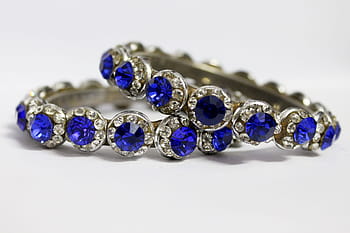
So much for walking the streets of gold in Heaven, I guess. Ezekiel 28 gives us another glance at the deep royalty of blue. Sapphires and other jewels adorn the great King of Tyre in this passage, representing his wisdom and prowess. Many say this is a description of Satan and his fall from Heaven. Once adorned and created as the “seal of perfection” with beauty and sophistication, this “guardian Cherub” became prideful and full of corruption and was eventually cast out by God. A good reminder to us to be wary of all that sparkles. Wealth may not be all “true blue”, shall we say?

Alas, most of us are not adorned with royal sapphires. Diamonds do not bedazzle our imperial necks, nor are we of noble “blue blood”. No worries, I found our blue, dear friends! In the common cuttlefish of the sea. “Techelet” is a Hebrew word referring to an ancient blue dye thought to have been extracted from this squid like creature. Although considered “special” and used sparingly to highlight, this dye was common enough for use in the average Hebrew garment. In the Torah, God commands Hebrew followers to attach “tzitzit” to the four corners of their garments to remind them of the Ten Commandments. (Numbers 15:38-39) This practice is also common among many orthodox Jews even today. One of those “tzitzit” (or fringes as you may have heard them called) should be, you guessed it: blue.
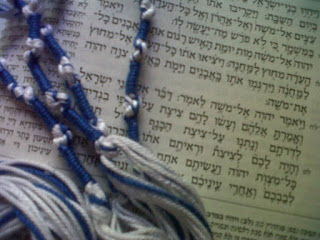
photo from Beit El Blog

Besides the fact that I just love that new word (tzitzit — it’s fun to say and spell!) I discovered new insight into an old Bible story. Many gospels describe the story of a woman with a long standing blood issue. The story tells the tale of this “unclean” and shunned woman who reaches out in faith to touch the “hem” or “fringe” of Jesus’ garment in hopes that, by her fatih alone, she might be healed. Tradition has it that the “fringe” they speak of ? Yup, it is the common blue “tzitzit” of Jesus’s shawl. Cool, eh?

And so we come full circle again in our study. Are you feeling a little “blue” today? Is life catching up with you or has the vast expanse of blue skies ahead have you feeling overwhelmed at the unknown? Perhaps your thoughts of nobility, wealth and wisdom have been stripped away and your skin is a bit more translucent and exposed to the harsh reality of the outside world? Maybe you need a little dose of the calm blue of the “tzitzit”. The ancient reminder of Who is in charge. The healing touch of Christ’s “fringe benefits” in a crowded world of chaos. May you be Blessed with Blue !

Are you enjoying our party?! Don’t forget to enter our I Still Believe movie ticket giveaway: click here. It’s your little “loot bag” for coming to the colouring party! Our movie review is coming soon — so watch your inbox for it! Want to learn more about “tzitzit” (LOL, I just love to say it!). Check out my Pinterest boards for more on how to make your own. Maybe it would be a fun Sunday School craft or home school project? Chat soon, my friends!

Meaning of White

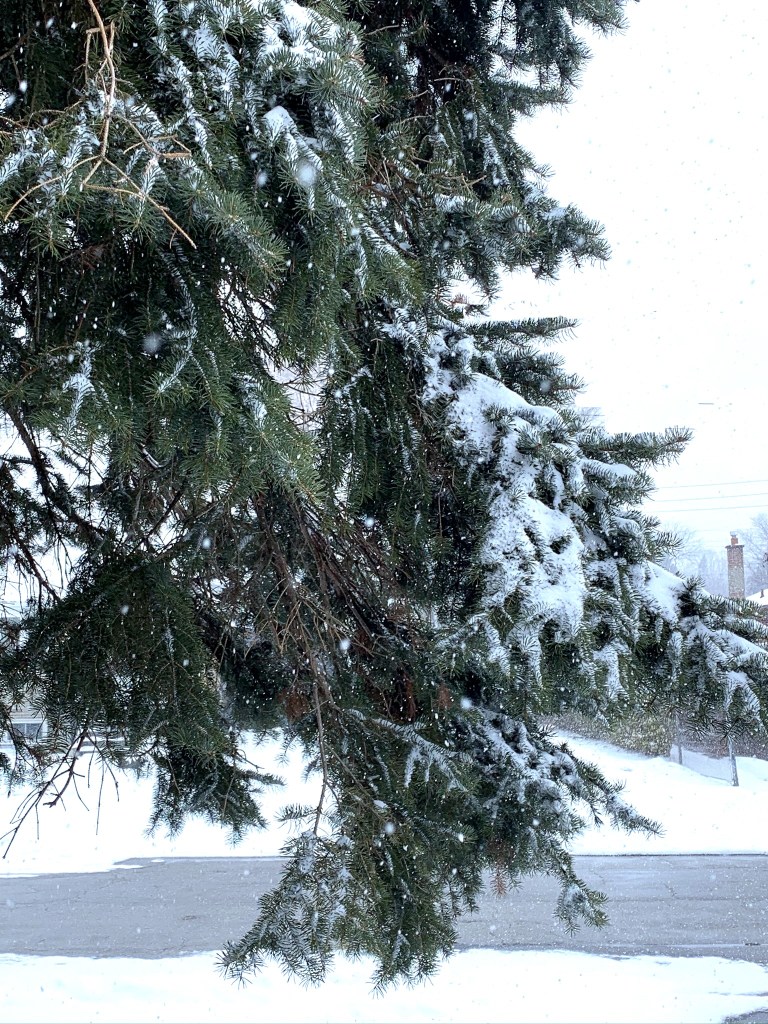
It’s been snowing here again. Another wallop of good, Canadian fun, just in time for the rush hour drive home. Thankfully, I’ve been able to watch it from the comfort of my window perch and not from the dashboard of the minivan travelling the 401 highway. Snow can be pretty from a windowsill; especially if the flakes are those fluffy, soft and quiet ones that drift down and gently alight on the branches of our evergreen out front. A gracious reminder to take time to appreciate stillness.

I’m pleased that the snow came this week, because our colouring party is focusing on white — and what could be more white then snow?! In fact, the Bible even uses it as our descriptive choice for this colour:

18 Come, let’s talk this over, says the Lord; no matter how deep the stain of your sins, I can take it out and make you as clean as freshly fallen snow. Even if you are stained as red as crimson, I can make you white as wool! “

Isaiah 1:18 (The Living Bible)
My View from the Windowsill

Isaiah is only one of the books that mentions white in conjunction with snow and wool… in the King James Version, white is used over 70 times! White skin, white hair, white snow, white wool, white horses. Seems to be a popular colour. My dad used to say white isn’t a colour at all, “It’s a shade” he says. Well, he’s sort of right. Technically, in the world of physics and some artists, black and white don’t fall under the definition of true colour. Remember that spectrum we looked at back in our first post about Rainbows? White contains all the possible wavelengths of light and is the “sum” of all the coloured wavelengths. Black is the opposite. Black is the absence of light and therefore the absence of colour. Artists use white and black to make darker or lighter shades of spectrum colours. They aren’t considered true colours themselves. They are either reflecting all light or absorbing it. No shades of grey. This is an important detail as we consider white symbolism.

It’s fairly safe to say that most of us attribute white to purity, cleanliness, innocence and unadulterated light. Think wedding dresses, bleach, daisies in a summer field. White is often the liturgical colour of Easter, as it reflects the idea of “new beginnings”. Too much white might make us think of cold, sterile and lifeless environments.

Photo Credit Chris Brignola (Unsplash)

Think Arctic wastelands and hospital subway tiles. Leviticus sights white in various skin diseases where the skin or hair “turns white” and requires cleansing. Speaking of cleansing, I love the white froth of hydrogen peroxide or vinegar and baking soda. Life giving oxygen mixing in the power of scientific wonder (bubbles!) to make everything clean and sparkly! I think it’s pretty cool that God has given us so many natural substances for everyday things… like cleaning.

Which brings us to our crucial discovery about white in the Bible. It reminds us that only through Christ are we made pure. Throughout the Old Testament, worshipers were told to bring lambs “without blemish” as their sacrifice for sins. Pure. White is often linked with all things righteous and acceptable in the sight of God. For He is a Holy God, and cannot acknowledge even that little bit of darkness into the pure Light spectrum. And yet, through Jesus’ sacrifice on the cross, we can be presented as “holy in His sight, without blemish and free from accusation…” Colossians 1. An encouraging thought, indeed!

However, we cannot simply leave this study without mentioning God’s warnings. A few times we are presented in life with things that appear to be pure, holy and clean. They have a positive message, are uplifting, and kind even. Seemingly wise and knowledgeable like the “white haired” elders of old. But — the Bible warns us against “whitewashing”. Matthew 23 and some commentaries on Revelation 6 warn us that what may appear to be “white” on the outside may be just the opposite on the inside… full of darkness and deceit. Satan is often described as “the angel of light” but is truly the “father of lies”. So even though his ways may appear good and trustworthy, we must be good stewards of God’s word and always be questioning and thinking and forever learning!

Image by Jörg Vieli from Pixabay

Oh friend, even the purest of snowfalls are easily trampled and muddied. Muck has a way of covering everything and ruining the innocence and purity of the absolute light, frozen in the spectrum. But God is bigger than that muck and mire and He says come, I’ll make you clean again, white as new fallen snow!


Thanks for following along in our “colouring party” posts. We hope you’ve enjoyed today’s thoughts on “white”. Want to make sure you don’t miss the next one? Sign up here for weekly muses! And don’t forget to check out our other colours from previous posts! As always, I love to hear your thoughts and comments!

Meaning of Red

Welcome back to the colouring party! This week we are going to look at a mysterious and paradoxical colour: the beautifully alluring colour of red. Take a moment to think of your version of red. Is it bright and colourful like the primary box of crayon-coloured fire trucks from your elementary school days? Or is it deep and foreboding like the thick petals of an English rose? Perhaps a more cheerful shade like summer strawberries or glinting bows on a Christmas package all tied up in ribbons? A pinkish shade like the tongue of a friendly puppy? Or almost black maroon like the dress of some evil mistress from the horror movies in stiletto heels? We have between 30 and 40 odd shades that we attribute to the colour “red”, each of us adhering to our own favourite: There is scarlet and crimson, cerise and magenta, maroon, carmine, claret and burgundy, as well as carnelian and cherry and cardinal red. To say nothing of ruby or garnet or vermilion, and wine, terracotta and rust; simply to name a few.

Photo by Pixabay on Pexels.com

Canadians, of course, love our red and white flag with the 11 pointed leaf, our beacon of allegiance and the symbol of all things maple. It reminds me that spring will finally arrive when the sap starts running and assures me that time does in fact move on, even when winter seems so long. You can take the figuratively or literally if you wish. Perhaps your Canadian vision of red includes Anne of Green Gables and the delightful story of the red-headed girl who so hated her auburn locks. You can read about my musings on her over at this post. Red hair, that’s another whole topic, isn’t it?

But let’s get back to our study of red. I might have chosen the most difficult colour to start with as it seems that this shade is so broad in its “meanings” and the internet has lots to say about it. It’s the longest colour in the spectrum of colours that humans can see, and is, in fact, the first colour that babies can “see”. Red is said to be a physical stimulant and actually raises our blood pressure and respiratory rate. Perhaps we need to re-paint our boy’s room as two of their four walls are red. And it chips terribly. Don’t use it for walls. 🙂

As I mentioned earlier, this shade of our colour wheel is almost paradoxical: it gets us going but halts us to “stop”. Often associated with blood, we think of it as “the red cross” of life giving — and yet, also of so much torture, and life ending violence. Certainly it is a colour of extremes, and seems to follow that in its biblical references.

 Now, I must make note here that I am not an expert on symbolism and I do not claim to have all the answers. It’s simply you and I thinking about such things and musing together. Biblical accounts and psychology and even “spirituality” often get muddled in the great wide world, so I will pick and choose our references as carefully as I can. So let’s dive in.

The Hebrew word for red is “oudem”. Its actually meaning is “Red Clay”. Think of the Biblical names Adam, Esau and Edom which are all derived from this Hebrew word and are often described as “ruddy” or the terracotta shade of clay from the earth. From this we have red representing humanity — and with it the sin of our human natures. We are nothing but mere mortals, primitive beings made of clay. That primal definition is carried in many circles and often leads us to think of red as elemental like fire, which in turn conjures up ideas like passion, anger, vengeance. This is certainly the case for the fiery red horse mentioned in Revelation 6 who will take away any peace left among men. Or the terrible vengeance described in Isaiah 63. Yes, one day our Holy God will have vengeance against the sin and destruction that evil has unleashed in our world — and our streets will run red with the destruction and agony of our passions and lust.

photo credit Demi-Brook of dbphotography

Be that as it may, our red, in it’s paradoxical ways, shows us the flip side of this destruction, for red can also be our signal for the life giving sacrifice of our Saviour’s blood shed on the cross. Time and time again we see it as a passage to safety, a cleansing from destruction and a sign that God’s plan will ultimately be the one to be carried out. Rahab’s scarlet flag for rescue, the sign of the blood red moon and painted doorposts of Egypt’s great rescue, and ultimately the cross where, if we choose, we may be washed as white as snow. Ah yes, red is truly a passionate colour — but not of Valentines and stiletto heels. It’s the passion of ultimate sacrifice, of agape love and of cleansing redemption. Turning clay into treasure.


I’m excited to be hosting this colouring party here at mittonmusings.com! Did you miss our first post? Don’t miss our next one! Join us and receive the muses each week via email! Subscribe here.