
Why Easter Lilies Symbolize New Beginnings

Hello again my beloveds! It’s been a minute, but here we are. I don’t know where the time is going! I just can’t seem to wrap my brain around blogging lately. There has been plenty of opportunity, but very little motivation. Maybe it’s the weather. It’s raining — again. This spring has been very, very wet. The ground is wet, the firewood is wet, my bunnies are damp, and no one is happy. Although a few things have been slowly moving forward… we have fence posts in for the new baby goats! And spring day old chicks come tomorrow! So, despite not being able to do much around because everything is soaking… time continues to move on. I suppose it is one thing we simply cannot stop: Time. Even in the rain.

I wanna go back in time for a minute. A few weeks ago, we celebrated one of, if not the most significant events in history. Easter. It was an unusual Easter weekend for us… kinda busy with a lot of travelling to see family (which are further away now), but nonetheless wonderful. Easter, of course, is when we commemorate the death and resurrection of Jesus. A poignant celebration in Christian faith. We’re still getting used to our bigger church and a larger church family, so it wasn’t as “intimate” as I’m used to, but worthy of mentioning. Chocolate treats and fancy meals with family notwithstanding.
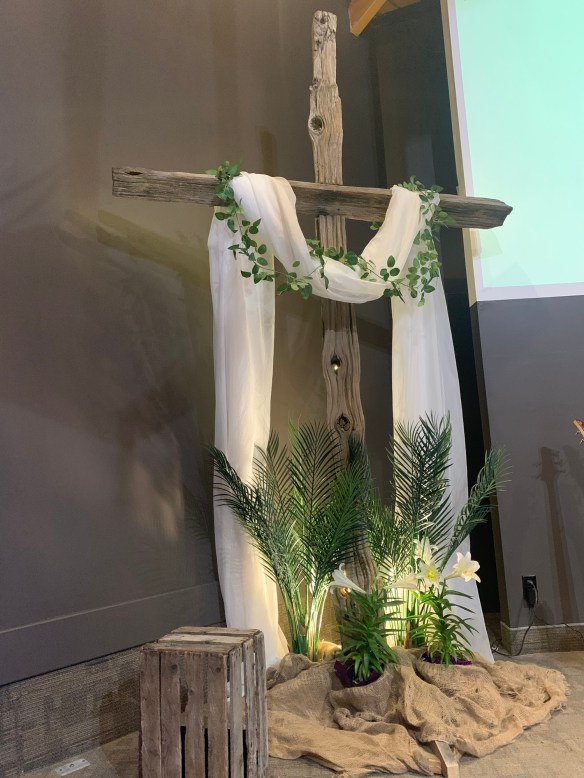
Easter and Lilies

Yet, we must circle back to our little plant theme we’re currently following, and chat about Easter lilies. Our sanctuary was decorated with them, and we used to have many in the city. So, how did the lily get associated with Easter? I didn’t know. So, like all good bloggers, I googled it. Google tells me the trumpet shaped, white flower has been traditionally associated with purity, rebirth and new beginnings. The shape reminds us of a trumpet… announcing the resurrection of Christ and His return. Obviously, new beginnings are what spring is all about… so it makes sense. A pure white flower. Okay, I get it.

Honestly though, I am not a fan of Easter lilies. I do not like their very pungent fragrance, they are extremely toxic to pets, and are messy…dropping pollen everywhere. Plus, they remind me of death. I don’t know why, but they seem to be in every funeral bouquet. I suppose it has something to do with that hope reborn association. Sorry to those of you who love ’em — just not for me. Any lily, in fact. Crazy tiger lilies in my garden… you can’t kill those invasive things! Please do not bring me any for mother’s day!

I suppose I shouldn’t be so harsh to a flower that the Bible mentions as beautiful (Luke 12) and is a symbol for purity. Solomon, in all his finest, never looked as good as the humble, white flower, they say. I suppose it is pretty enough. More partial to the rose, myself. I knew a lady who loved the lilies and all the mismatching and hybrids and colour varieties. She ordered bulbs on a regular basis for her garden. I have a few daylilies that are okay hanging out in mine, but the lily is not one I’d pick to plant.
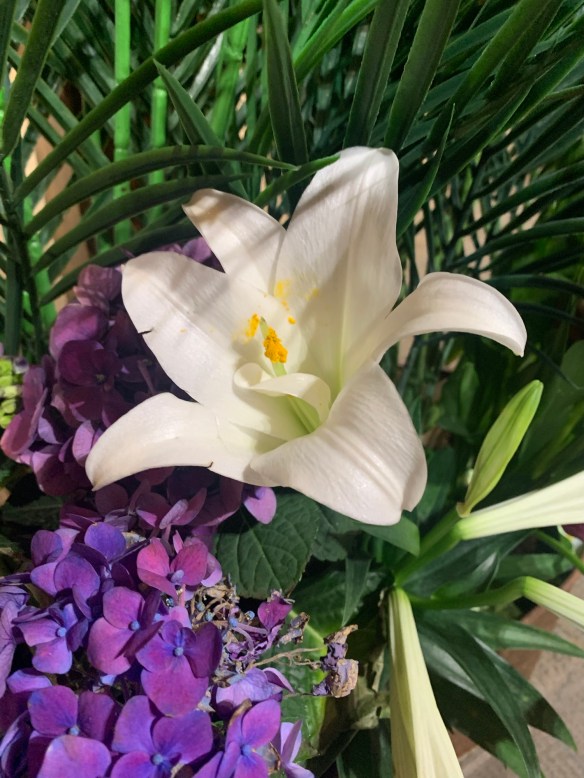
However, I did find one tidbit of info interesting. The life cycle of an Easter lily begins with the bulb growing underground for several years before sprouting its long stalk and white flower. A perfect example of death and resurrection… buried under ground and rebirth. That is worth celebrating. That can bring meaning to spring. Especially right now for us, after a brutally long winter and a very rainy spring. I am ready for some new life again. I am ready for a new awakening in the soil and the garden sprouting. I’m excited for the new babies coming and the joy new life brings. That, my friends, is even worth a stinky flower. I hope you feel a rebirth in your souls this week, my beloveds! Until we “meet” again.

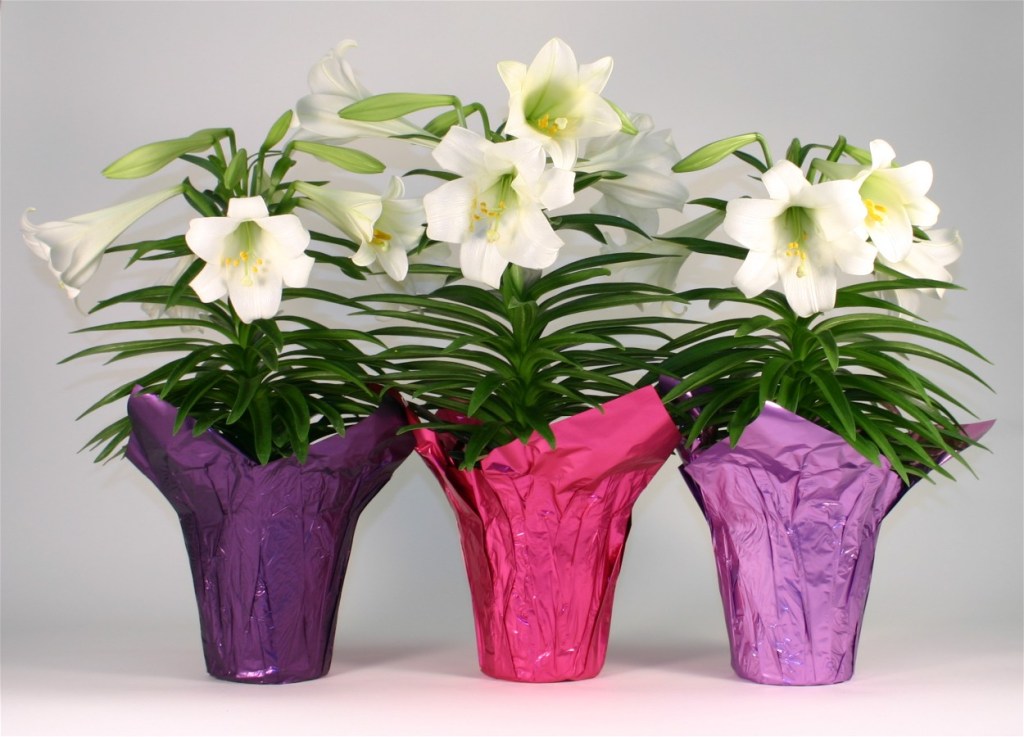
Easter Lily

Happy Easter! It’s been a little different this year, hasn’t it? We were blessed enough to be able to go to church… real, in person church… but celebrations were low key due to Covid. Was it the same where you are? No Easter bonnets, no new outfits, no spring flowers, and no Easter lilies. (We did eat chocolate, so that was a thing). Usually, the church altar is decked out with a few pure white Lilium longiflorums, or Easter lilies, that usually get distributed out after the service to brighten someone’s day. They are highly poisonous to cats, so I choose to share. Besides, I am not a fan. Easter lilies stink. To me, they smell like “death”.

That sounds a little harsh, I suppose, but I don’t like the fragrance. The white, trumpet like flowers are usually ladened with pungiant yellow pollen and always remind me of funerals — or Easter — which, to be realistic, has me musing about death. Death seems to be one of those things a good Canadian doesn’t want to talk about, and I am not sure why. Especially as Jesus followers. Easter reminds us that Christ has swallowed up death, and we sing about His victory over it, etc. etc. We “believe” it — but too many times we deal with death in an unhealthy way. Too many of us fall into deep dispare and find it difficult to climb out of that pit. Now, before the hubby tells me I’m cold-hearted, of course, I mourn with others at the loss of a loved one… even a beloved pet gets me going; but the truth is, death is a very big part of life. And the death of a believer should have us rejoicing that he or she is celebrating in Heaven. Not pining for some selfish wish for the “way it was”.

So many other cultures and religions “celebrate” death. Unfortunately, it is often tied to the unknown afterlife of the individual and assuring their “profitable” passage to their eternal homes… or tied to the “spirits” left behind and assuring they are appeased by the living. You’ve probably heard of opening the windows of the home to allow spirits to have “free access” out…or perhaps Mexico’s famous “Día de Los Muertos.” This is a massive event that lasts three days, beginning on October 31. According to Mexican traditions, families have the responsibility to keep the memory of loved ones present for as long as possible. Walk through any cemetery and you’ll witness first hand how memories often keep us burdened by the thoughts of this life… what we did here and whether it will get us to the next. Sorry, no amount of flowers — or good deeds — will secure your spot.

Let’s get back to lilies, shall we? Originally native to some islands in Japan, the bulbs were brought to Oregon by WWI soldier, Louis Houghton, who shared them with his gardening friends. Apparently they are very difficult to propigate and Oregon and California are still prime producers. Farmers often work for years to produce enough flowers to properly bloom to supply us with our Easter decorations. (Perhaps I need to appreciate them more). Often referred to as “white-robed apostles of hope,” their colour symbolizes the purity of Christ, who was free from sin. The trumpet shape of the Easter lily represents a trumpet sounding the message that Jesus has risen, and the nature in which lilies grow is symbolic of the resurrection as well: from ugly bulbs that are underground for three years or longer, they become beautiful flowers. This process is reminiscent of Jesus’s brutal death and holy resurrection. Thus, lilies represent rebirth and hope, just as the resurrection does in the Christian faith. (via southern living.com)

They still stink, though. But, I suppose, before I wrinkle up my nose at them, I should be reminded that they may be a fitting symbol to decorate with at Easter. A good reminder of our life in Christ, free of worry and heartache, because He, has indeed, conqured death!